
Selecting the right tool is the difference between a professional finish and a chipped panel. In the market there are various options, but to get it right with grooving milling cutters, we must look at the composition of the material and the type of machine we will use.
1. Analyze the number of teeth (Z)
The number of teeth determines the feed rate and the cleanliness of the cut. Depending on your production, these are the leading options:
F10 Series (Z4)
Z4 Grooving milling cutter: Ideal for fast cuts in softwoods or processes where production speed is a priority.
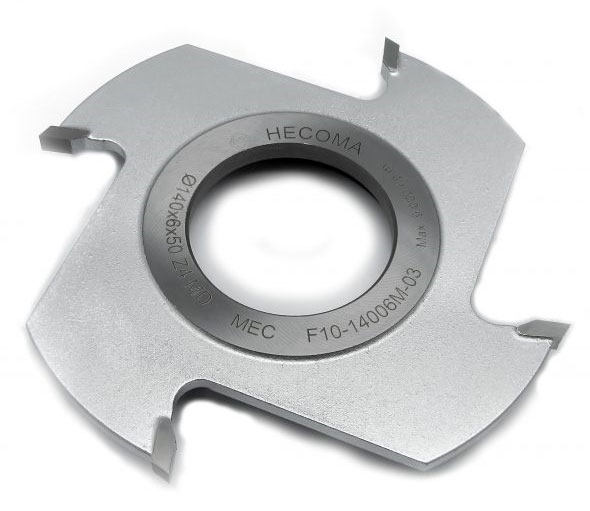 View F10 Cutter
F11 Series (Z8)
Z8 Grooving milling cutter: Having more teeth, it offers a much finer finish and is perfect for hardwoods.
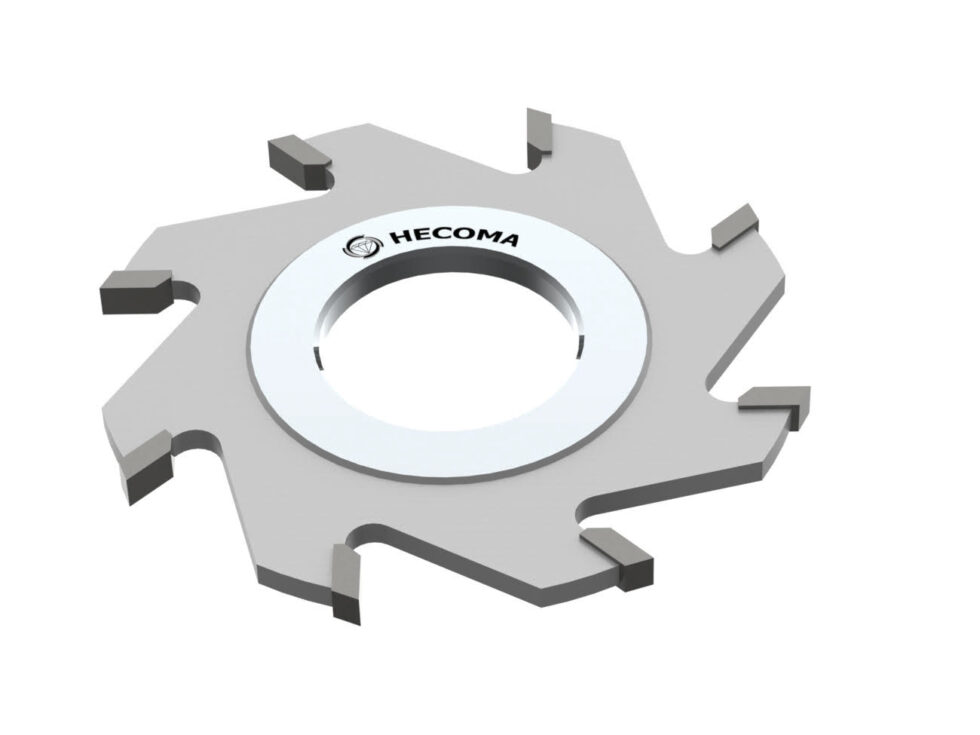 View F11 Cutter
2. Do you need spurs? (The Z+V system)
If you work with delicate materials such as melamine or plywood, standard grooving milling cutters can chip the edges. To avoid this, HECOMA engineering proposes the spur system:
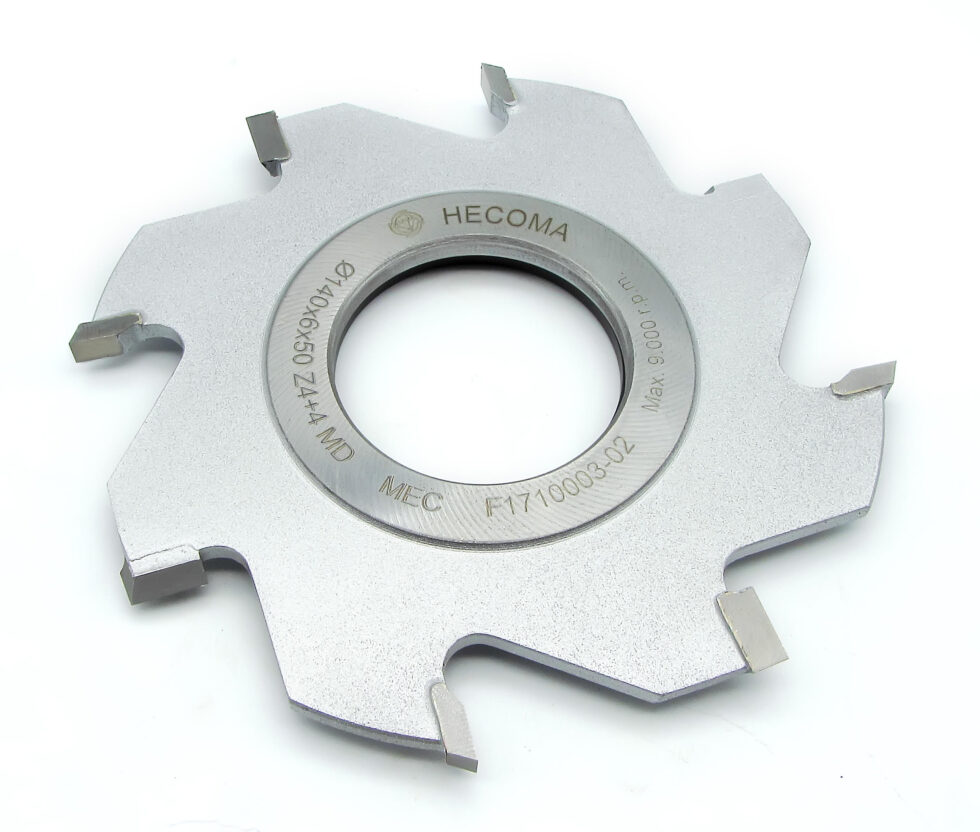
Buy Professional F12 Series
3. Versatility: Fixed or Adjustable?
Optimize your investment by considering how often you change the board thickness in your projects:
| Type of Grooving Milling Cutter | Main Advantage | |
|---|---|---|
| Fixed Grooving Milling Cutters | Maximum stability in standard sizes. | |
| Adjustable Grooving Milling Cutters | Micrometric adjustment for special thicknesses. | View F13 Series |
4. Technical data and safety
Before mounting your grooving milling cutters, always verify the specifications engraved on the tool body. Factors such as the maximum RPM and the feed type (MEC for mechanical feed) are critical for the correct performance of the tool.
Improve your production today
We have the most complete stock of high-precision grooving milling cutters for industrial woodworking.
BUY ONLINE NOW